
How much should a small business spend on marketing?
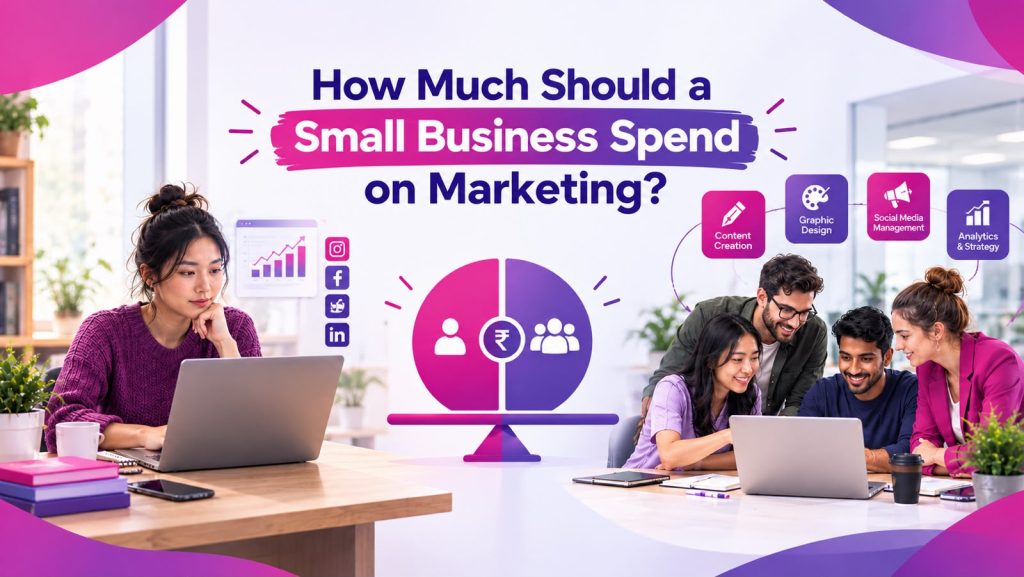
If you have ever wondered how much a small business should spend on marketing you have probably seen answers that range from nothing to a fortune.
The honest answer depends on a business revenue, the profit margin of a small business, and how a small business wants to grow.
A bakery in Lalitpur and a software startup in London will not need the budget, but the thinking behind both small businesses is the same.
This guide shows a business how to set a realistic number, where a small business should spend it first and when outside help is worth paying for.
What percentage of revenue should a small business spend on marketing?
Most small businesses begin with 7 to 8 percent of revenue, which is the small business sales before any costs are taken out.
The U.S. Small Business Administration has long suggested this range for businesses earning under 5 million U.S. Dollars a year with profit margins.
This is a U.S. Guideline, so a small business should treat it as a starting point because costs, competition and industry differ from country to country.
Your stage matters more than the average. A new small business in its first year has to build awareness from zero, so small business usually spends a larger share of revenue than a shop with repeat customers.
A restaurant with a dining room every weekend can spend less on finding people. A new clinic with a waiting room cannot spend little.
| Business stage | Typical budget approach | What the money should do |
|---|---|---|
| New business, first year | Higher share of revenue | Build awareness and set up the basics, such as a website and Google listing |
| Growing business | Moderate share that rises with sales | Test channels and put more into what works |
| Established business | Lower, steady share | Keep customers and protect your position |
Profit margin matters at each business stage. Marketing is paid for out of profit, so a small business with margins cannot copy the spending of a small business with healthy margins.
If a small business earns a little on each sale, a small business needs to be much sharper about where every part of the budget goes.
How do you work out your marketing budget?
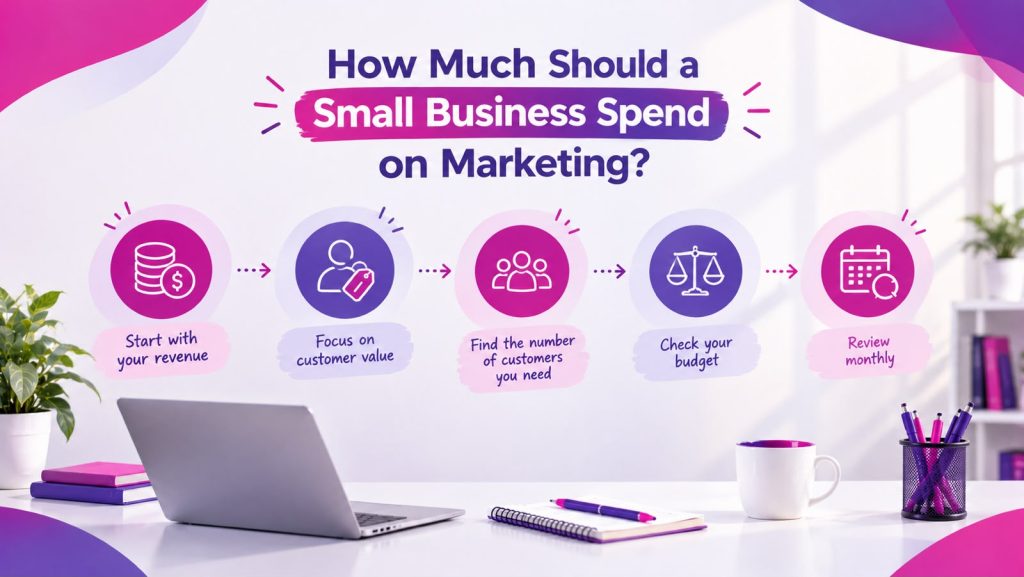
Start with a percentage of a business’s expected revenue. Test it against what customers mean to a business. The percentage gives a business an estimate and the customer value tells a business whether the number makes sense. Here is a simple way to do it.
Estimate a business revenue for the 12 months. Apply a starting percentage, such as the seven to eight percent benchmark.
Work out what one customer is worth to a business: the sale amount multiplied by how that customer buys.
Decide how customers a small business needs to reach its goal.
Check if a small business budget can realistically bring in those customers and adjust if it cannot.
Review the numbers every month. Move a business’s money toward what works.
Picture a guesthouse owner in Pokhara. She knows an average guest stays several nights and sometimes returns with friends.
Once she knows what one booking is worth, she can decide how much a small business is happy to pay to win that booking. That is more useful than copying what a competitor spends.
Here is a tip most budget guides skip: fund a business sales cycle, not a small business month. The small business sales cycle is the time between someone hearing about a business and buying from a small business.
A small business that sells wedding photography or business software might wait months for a decision. A small business budget that only covers four weeks will stop before results show.
Match a business commitment to how a small business customer takes to decide.
Where should a small business spend its marketing money first?
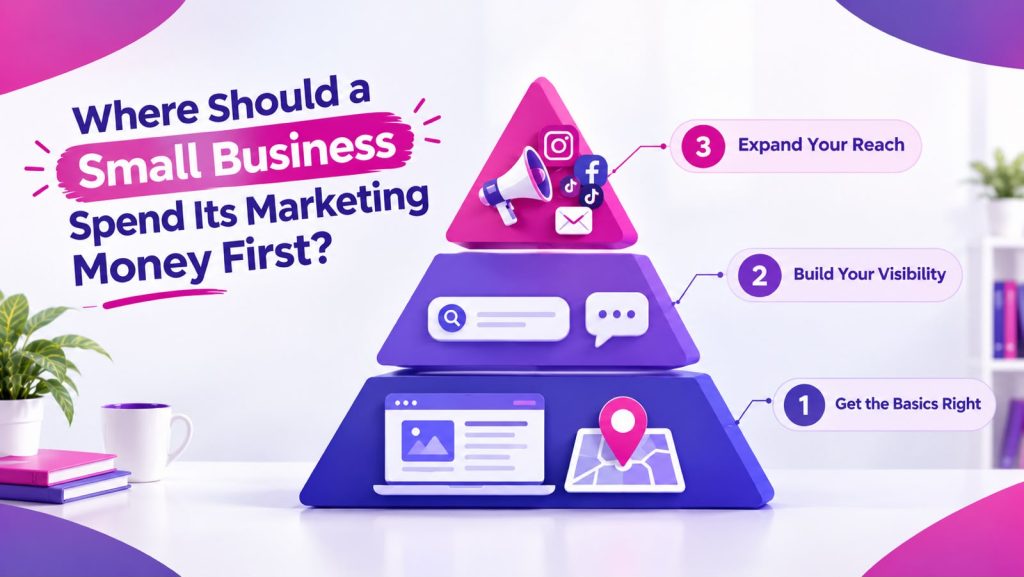
Spend first on the things people check right before they buy: a website, a Google Business Profile and one or two channels where your customers already spend time.
A Google Business Profile is the listing that shows a business on Google Search and Maps. For a business a small business often matters before paid advertising does.
Fix a business photos opening hours and contact details. Ask business customers for reviews.
Imagine a bakery in Lalitpur tht wants weekend orders. A tidy Google listing photos and a steady Instagram or Facebook presence will likely do more at the start than an ad campaign.
Once orders are coming in a paid budget can put the selling items in front of people nearby.
The same logic works abroad. A dental clinic in Sydney or a plumber in Manchester needs to be found when someone searches for help nearby in a hurry. Local search and reviews come first. Paid ads for urgent services can follow.
- Website and local listings: the base that all other channels send people to.
- SEO(search engine optimization): SEO helps your website appear when people search. It’s slower, but it keeps working even after you stop paying.
- Media: Social media is useful for staying visible and building trust with people who already know you.
- Paid ads: Paid ads give results but they stop the moment your budget stops.
- Email: Email is a way to bring past customers back.
You do not need every channel at once. Spreading a budget across six channels usually lets each channel work.
Pick two channels. Run those two channels properly for a month. Measure what happens. It is better to be clear in two places than faint in six.
When does it make sense to hire a marketing agency?
I found that hiring a marketing agency makes sense when you know marketing could grow your business. You do not have the time or skills to run marketing well yourself.
Doing marketing yourself works for a days especially when the budget’s small. The trouble starts when marketing keeps sliding to the bottom of your to‑do list or when you are paying for ads without knowing if they work.
At that point, a good marketing agency can bring a plan, regular reporting, and experience from businesses.
Before you hire a marketing agency, ask the marketing agency to explain where your money will go and what the marketing agency will measure. Be careful with anyone who guarantees rankings, traffic or sales because no honest marketing agency can promise those.
Agency fees vary widely by country, services, and team size ,so ask for a written scope before you compare prices. Whether you speak to Focus Creation or any other digital marketing agency a clear plan matters more than a quote.
Frequently asked questions
Is it better to spend a percentage of revenue or a fixed amount?
A percentage works well because it grows and shrinks with your sales. A fixed amount is easier to plan for startups with revenue. Many business owners start with a fixed amount. Switch to a percentage once sales grow.
How much should a startup spend on marketing?
A startup usually spends a larger share of revenue than an established business, because the startup must build awareness from nothing. The exact amount depends on your funds, so set a number you can keep paying for the length of your sales cycle.
Can I market my business for free?
Yes, you can do a lot for free, such as setting up a Google Business Profile posting on media and asking for reviews. Free methods cost time. Your time has a value too. Once your hours are better spent running the business, paid help starts to make sense.
How long does it take to see results from marketing?
It depends on the channel. Paid ads can bring visitors within days, while SEO and content usually take months to build. Nobody can honestly promise a fixed result or date.
What should you do next?
Start this week by choosing a starting percentage, writing down what one customer is worth and picking two channels to focus on.
Set the budget for three months, then review the numbers before you change anything. Small, steady spending usually beats a burst that stops after a week. Keep a record of which actions bring calls, enquiries or sales.
Your marketing budget does not need to be perfect on day one. It needs to be tracked and adjusted as you learn. If you would like an opinion on your numbers, you can talk to Focus Creation about a free marketing consultation.
Have An Idea
Worth Building?
Let's build a stronger digital presence for your brand.Let's turn it into something people notice, remember, and connect with.
Let's Work Together