
10 Marketing Mistakes Startups Make In Their First Year ( And How To Avoid Them)
Many founders will spend months creating their product , yet only spend a few days planning their marketing. Once they launch, they’ll put some content on social media and get some likes.
However, there won’t be any sales. Most of these mistakes aren’t really due to lack of skills or resources but instead are easy to fix once you know what to do.
Below are 10 marketing mistakes and how to fix them. These mistakes happen to startups regardless of where you’re launching from, whether it be Kathmandu, London or Dubai.
As a marketing agency in Kathmandu, we provide branding, content, media and web design. The solutions below will include some aspects of each.
What Are the Most Common Marketing Mistakes Startups Make?
Two common mistakes are trying to target everyone and having no clear objectives. These mistakes will affect everything else later on so it’s best to fix these first. This is what they look like in practice.
Mistake 1: Trying to target everyone.
This is a common mistake for a new software startup in London. They’ll have a target audience of “any business who wants to grow”.
This is far too broad to create great headlines. Instead, pick one specific audience such as a restaurant owner or freelance designer and be very specific with their pain points. You can always expand this later.
Mistake 2: No clear objective.
“Getting followers” isn’t a clear objective. An objective should be getting 20 enquiries a month from restaurants.
Try to have one clear objective throughout the 90 days. Decide how you can measure this. Without this, you’ll not know if your marketing strategy is working.
Tip: Create a list of words. Whilst talking to 20-30 customers, write down the words they use to describe their pain points. This will help with creating great headlines, ad copy and keywords.
It will also show you how customers from different countries will describe the need. This can help if you’re going to be selling.
Why Do Startups Have Issues With Branding & Their Website?
Startups have issues because they don’t realise how important branding and websites are. When people come across your brand, they’ll quickly decide if they can trust you.
They’ll look at your name, branding, and website. If it doesn’t look cohesive can make a great product seem risky.
Mistake 3: Inconsistent branding.
Using different logos on Facebook, invoices, and your shop sign can make your young business look unprofessional. Your branding should be cohesive with the same colours, fonts, tone, and logo.
Create a style guide for your branding (one page to start with). This can be created by you or with a team who provide branding services.
Mistake 4: A website that isn’t ready for customer.
Many websites in the early stages are slow to load and don’t make it easy to contact you. Don’t mention who you help.
For example a trekking equipment store in Pokhara may not have a way to ask a question on their website. This will cause customers to leave without saying anything. You’ll never know why.
Every page should have clear information on what you offer and what you help. Make it obvious what they can do next.
How Should Startups Pick Their Marketing Channels?
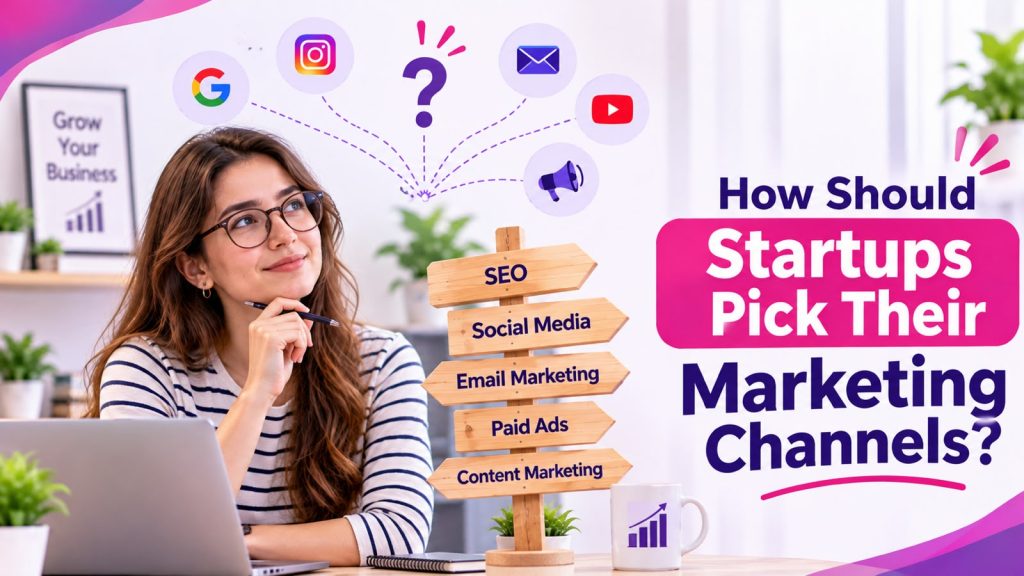
Pick 1-2 channels your customers are using and do these well. A channel is anywhere you can reach your customers, such as Instagram, Google Search, email or WhatsApp group.
Many startups fail with digital marketing because they wanted to be on all platforms. This causes your efforts to be spread too thin and gives weak results from all channels.
Mistake 5: Being on every platform.
A cafe in Lalitpur may be posting daily on 4 different apps however, most of their new customers are coming from searching on a map.
Look at how your last 10 customers found you and focus on these. Only add more channels once you’re running one well. Quality over quantity.
Mistake 6: Not optimising for search.
Optimising for search engines (SEO) means making your website easy to find and understand by search engines and AI tools. Many startups don’t do this as it seems slow.
However, most people searching for a solution will have a need. Start by optimising your page titles and providing helpful answers to questions. Use Google’s free SEO Starter Guide.
If you’re helping within an area complete your Google Business Profile.
What Common Content & Customer Mistakes Hold Startups Back?
The main mistake is not planning your content. Another is not focusing on your existing customers. Content should only be used if it answers a question your audience has.
Your customers are your marketing. What they say carries more weight than what you say. Many new businesses forget this.
Mistake 7: Posting without Plan.
Random content, discount banners and festival greetings won’t help build trust. Pick 3-4 topics to post about such as answering customer questions, behind the scenes, tips and real results.
Rotate your content. Plan 2 weeks ahead so you don’t have to guess what to post. A basic spreadsheet calendar is fine.
Mistake 8: Not focusing on customers.
Your initial customers can provide reviews, referrals and repeat orders. Many startups don’t ask. Thank them for their purchase and politely ask for a review/photo. Keep an email list or WhatsApp broadcast list (with permission).
This means you can directly update them. Happy customers who refer friends cost little and add value
How Can You Spend Your Marketing Budget Wisely & Measure Results?
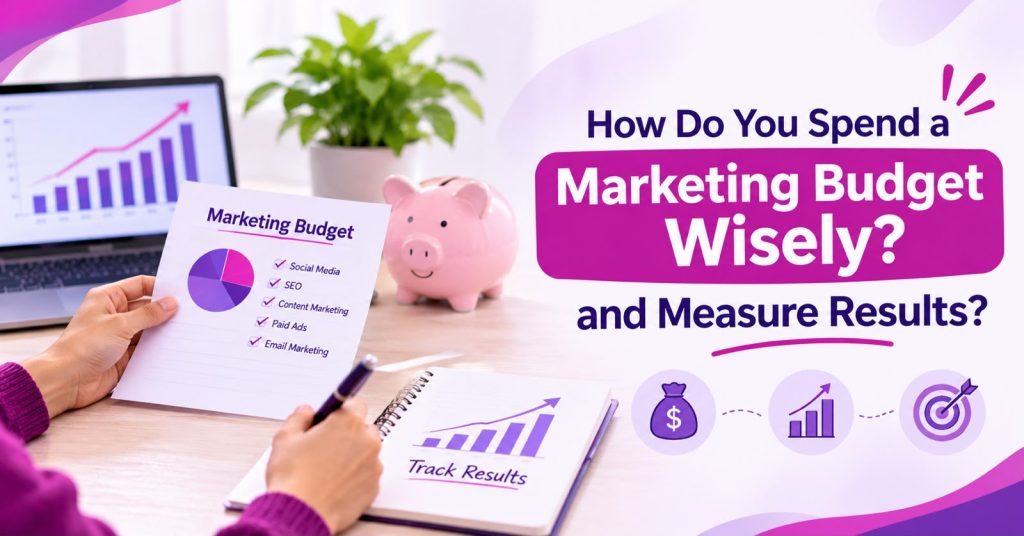
Spend on testing. Measure your results. Increase your spend on what’s working. Most startups will have a limited budget in their first year. Every test should have a reason. Know what a good result looks like. Review your numbers monthly.
At a minimum, track these three things:
- Website traffic and where it’s from.
- Enquiries/sales per channel.
- Cost per customer.
Mistake 9: Spending without tracking.
Some founders will increase their content for weeks yet not know what they’ve spent. Use free tools such as Google Analytics and the insights on each platform. Always ask for how they found you on every enquiry. This will show you where to spend.
Mistake 10: Expecting results too fast.
Marketing usually takes months to start working. Results will be low and inconsistent. Many startups will stop using a channel after 3 weeks.
Set a time frame for each test (60-90 days). Use data to decide. No one can guarantee results so be careful.
Frequently Asked Questions
What’s the biggest marketing mistake a startup can make?
Not knowing who your customer is. This will mean everything you do with your marketing otherwise, will be a guess. Start with one customer segment.
How much should a startup spend on marketing?
There’s no set amount. It will depend on your objectives, industry, and where you are. Start with a test budget. Track your results and increase where you’re getting results. A marketing professional can help you decide on an amount.
Should a startup hire a marketing agency or do it in house?
It depends on your time, skills and budget. Some founders will do the basics themselves. However, use an agency for branding, content and web design. Ask any agency how they’ll track progress.
How long does it take to see results from marketing?
This will depend on the channel. Paid ads can give you some clues quicker. SEO and branding usually take time. Think of your 90 days as a learning curve.
All startups will make marketing mistakes. This is totally normal! The aim is to spot them early so that you can easily fix it. Pick one of the points from the list and add the solution to your marketing plan in your first year.
If you’d like an opinion then speak to Focus Creation about our free marketing consultation.
Have An Idea
Worth Building?
Let's build a stronger digital presence for your brand.Let's turn it into something people notice, remember, and connect with.
Let's Work Together